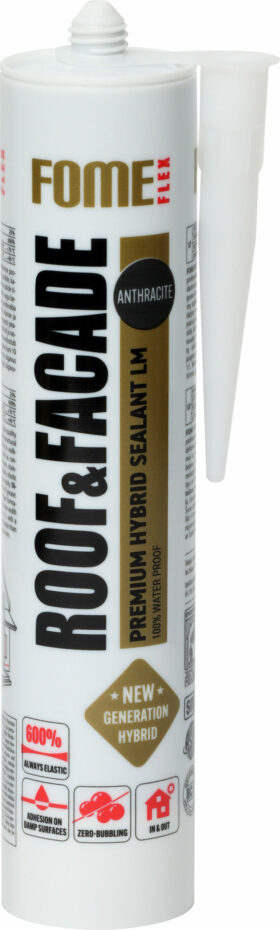
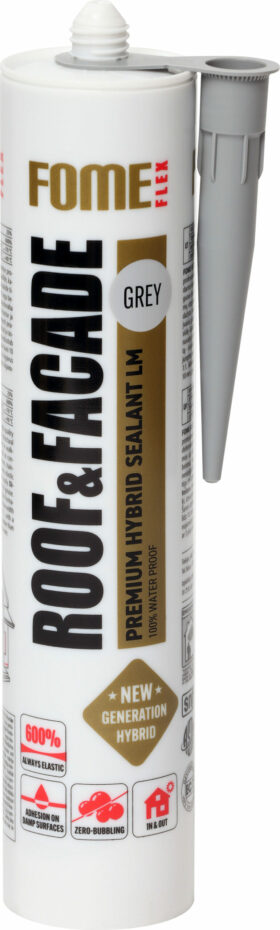
- Roofing System Integration – Seal roof penetrations, flashing connections, and expansion joints with confidence using hybrid sealants designed for extreme weather exposure. The bubble-free curing technology prevents seal failure from UV exposure and temperature extremes, ensuring long-term roof system integrity.
- Multi-Material Building Connections – Bridge dissimilar materials including concrete to aluminum, painted wood to stainless steel, and enamel to plastic substrates with superior adhesion characteristics. The STPE chemistry bonds effectively across different substrate types without requiring multiple primer systems.
- Curtain Wall and Glazing Systems – Transparent hybrid sealant options provide invisible weathersealing for glazing applications where appearance matters. The low modulus formulation prevents stress concentration that could damage glass or glazing frames during thermal movement.
- Expansion Joint Sealing – Critical structural joints require sealants that accommodate movement without losing adhesion. The 2-3 mm daily curing rate allows proper joint depth development while the zero shrinkage formulation ensures complete void filling and long-term seal integrity.
- HVAC and Mechanical Penetrations – Seal ductwork, piping, and equipment penetrations through building envelopes with hybrid sealants that provide both air sealing and structural flexibility. The almost odorless, solvent-free formulation makes them suitable for occupied building applications.
- Transportation Infrastructure – Bridge expansion joints, tunnel connections, and parking structure sealing benefit from hybrid sealants that handle continuous vibration and heavy loading while maintaining weatherproof performance across temperature extremes from -30°C to +70°C.
- Industrial Building Maintenance – Retrofit sealing applications where existing joint materials have failed benefit from the excellent adhesion to aged substrates. The isocyanate-free formulation eliminates health concerns during application in occupied industrial facilities.
Project Planning Guide: Hybrid Sealant Requirements
Calculating hybrid sealant needs requires understanding joint dimensions and proper depth-to-width ratios. For joints up to 10 mm wide, maintain a 1:1 depth-to-width ratio with minimum 5 mm dimensions. Wider joints over 10 mm require depth calculated as width divided by 3 plus 6 mm. A 300 ml cartridge typically covers 12-15 linear meters of 6 mm x 6 mm joints, while 600 ml cartridges handle 24-30 linear meters of similar dimensions. Factor in 10% additional material for waste, tooling, and irregular joint profiles. Large facade projects benefit from consistent color batches – order complete job quantities from single production runs to ensure color uniformity.
Hybrid Sealants: Application Instructions
- Surface Preparation Standards – Clean all joint surfaces thoroughly to remove dust, grease, loose particles, and previous sealant residue. Slightly porous surfaces provide better mechanical adhesion than perfectly smooth ones. Use isopropyl alcohol for final cleaning and allow complete evaporation before sealant application.
- Environmental Application Conditions – Apply hybrid sealants in temperatures between +5°C and +40°C for optimal flow characteristics and proper curing. Avoid application during precipitation or when rain is expected within 2 hours. High humidity (up to 70%) actually accelerates cure rate, making these sealants ideal for coastal and high-moisture environments.
- Professional Tooling Technique – Install backing rod or bond breaker tape at proper depth before sealant application. Apply sealant in continuous beads without air entrapment, slightly overfilling the joint. Tool immediately with appropriate tools to achieve proper profile and ensure complete substrate contact along joint edges.
- Joint Geometry Requirements – Maintain proper depth-to-width ratios for optimal performance. Shallow joints may lack sufficient material for movement accommodation, while excessive depth can cause cohesive failure. The 0.45-0.5 N/mm² modulus provides low-stress joint performance when properly dimensioned.
- Curing and Protection – Allow 30 minutes skin formation time before exposure to moisture or contamination. Full cure develops at 3 mm per 24-hour period, requiring 2-3 days for typical joint depths. Protect uncured sealant from direct water contact and debris contamination during initial cure period.
- Quality Control Verification – Check for complete substrate adhesion along joint edges and proper sealant profile without voids or tool marks. The 1.3-2.4 N/mm² tensile strength develops fully within 7 days under normal conditions, providing reliable long-term seal performance.
Technical Performance Advantages
Our hybrid sealant technology delivers measurable performance benefits over traditional alternatives. The STPE chemistry provides excellent adhesion without primers on most common building substrates while maintaining permanent flexibility through 400% elongation capacity. Zero shrinkage ensures complete joint filling, while the low 0.45-0.5 N/mm² modulus prevents stress concentration on delicate substrates. Fire resistance class E certification meets building code requirements for construction applications.
Frequently Asked Questions
What makes hybrid sealants different from polyurethane or silicone alternatives?
Hybrid sealants combine the best characteristics of polyurethane and silicone technologies while eliminating their limitations. Unlike polyurethane sealants, hybrids contain no isocyanates, making them safer for occupied building applications. Unlike silicone, hybrid sealants can be painted (after fully curing) and offer superior adhesion to porous substrates without primers. The STPE chemistry provides excellent durability with lower environmental impact.
Can FOME FLEX ROOF&FACADE sealants be painted after curing?
Yes, these hybrid sealants accept most architectural coatings and paints once fully cured. The surface energy characteristics allow good paint adhesion, unlike silicone sealants that typically reject coatings. Test paint compatibility on small areas first, and ensure complete sealant cure (typically 3-7 days) before paint application.
How do I achieve proper joint depth for optimal performance?
Joint depth directly affects sealant performance and longevity. For joints up to 10 mm wide, maintain 1:1 depth-to-width ratio with 5 mm minimum dimensions. For wider joints, calculate depth as joint width divided by 3, plus 6 mm. Proper depth ensures adequate material volume for movement accommodation while preventing cohesive failure from excessive thickness.
What temperature range can these hybrid sealants withstand after curing?
FOME FLEX ROOF&FACADE sealants maintain performance from -30°C to +70°C, suitable for most global climate conditions. This temperature range covers typical building envelope requirements including both winter cold exposure and summer heat gain on dark surfaces. The low modulus formulation prevents stress buildup during thermal cycling.
How long do hybrid sealants typically last in exterior applications?
Properly installed hybrid sealants provide 15-25 years of service life in typical exterior applications. Longevity depends on joint design, substrate preparation, environmental exposure, and structural movement magnitude. The combination of UV resistance, weatherability, and maintained flexibility through temperature cycling contributes to extended service life compared to traditional alternatives.
Discover Tegra State’s Complete Sealant Range
Our hybrid sealant solutions integrate seamlessly with Tegra State’s comprehensive sealing product line:
- Polyurethane Sealants provide high-modulus performance for structural applications requiring maximum strength and chemical resistance, complementing hybrid sealants in complex building envelope systems.
- Silicone Sealants offer superior high-temperature performance and UV resistance for specialized applications where hybrid sealant temperature limits may be exceeded.
- Acrylic Sealants deliver paintable, interior-focused solutions that work alongside hybrid sealants for comprehensive building envelope sealing strategies.